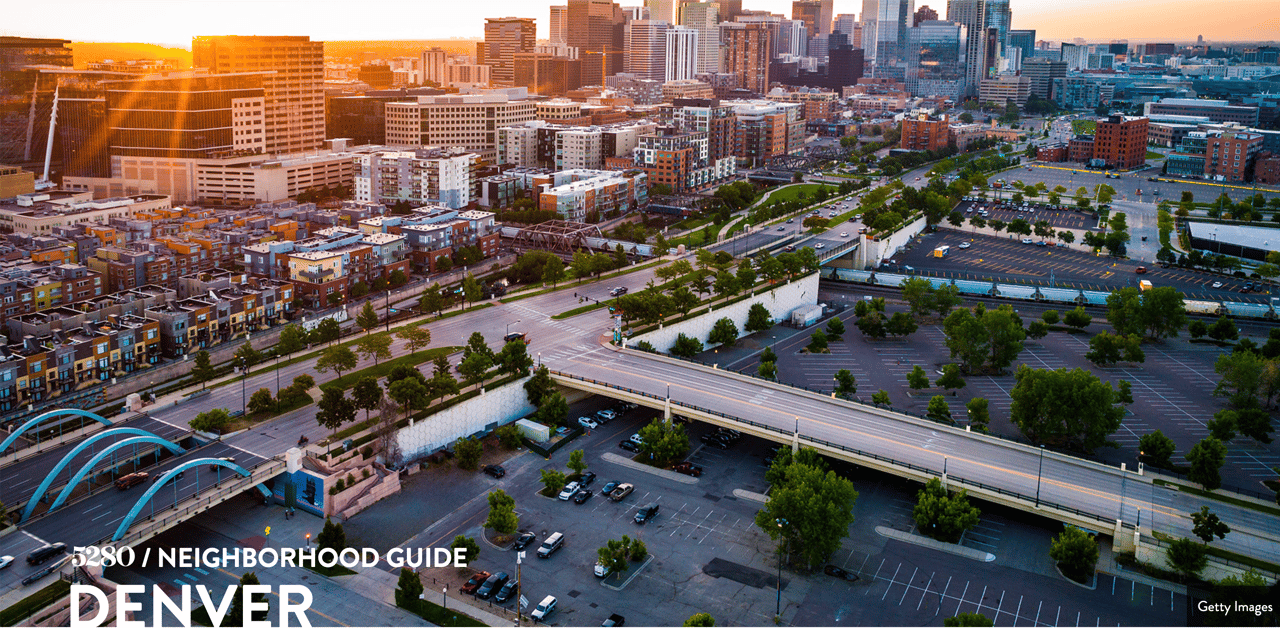
Drive south on University Boulevard from Cherry Creek and you cross an invisible line at Mississippi Avenue, the exact street where Bonnie Brae and Belcaro give way to Cory-Merrill. On one side, curving streets lined with 1930s Tudors and brick ranches that look untouched since Eisenhower was president. Cross south of Mississippi and the streetscape changes block by block: a 1948 bungalow squeezed between two new-construction farmhouses with steel casement windows and three-car garages, then another lot with a dumpster and a foundation pour.
Same decade. Same price bracket. Same ten-minute drive to downtown. So why did one neighborhood become Denver's busiest teardown market while its neighbor a few blocks over stayed frozen in amber?
The answer has nothing to do with schools, walkability, or which HOA has stricter rules. It comes down to a decision made by surveyors roughly a century ago, and it explains something buyers cross-shopping Bonnie Brae, Belcaro, and Cory-Merrill in 2026 need to understand before they fall in love with a listing photo.
The Lot Lines Were Drawn a Century Ago
Bonnie Brae and the neighboring stretch of Wash Park were platted with narrow lots, typically 3,000 to 4,500 square feet. Cory-Merrill, developed slightly later just to the south, got generous 6,000-plus square foot parcels from the start.
That gap matters more than it sounds. A wide-body luxury build with a main-floor primary suite and a three-car garage needs room a 3,500-square-foot Bonnie Brae lot simply doesn't have. Cory-Merrill's extra land made those builds possible before a single hammer swung.
The neighborhood's original housing stock made the math even more favorable for teardown economics. Developer Les Tremblay built rows of compact 600-square-foot frame homes for returning World War II veterans on Cory-Merrill's lots, often two to a double parcel. A house that small, sitting on that much dirt, was never going to stay small forever. The land was worth more than the structure decades before anyone used the phrase "scrape and build."
Bonnie Brae's original stock told a different story. Its 1920s and 1930s homes, many still standing along the neighborhood's namesake elliptical park, were built bigger relative to their lots from the beginning. There was less daylight between what existed and what a builder could physically fit.
Why Developers Picked Cory-Merrill First
Lot geometry explains what's possible. It doesn't fully explain what happened first.
When Denver's earliest scrape wave hit south Denver, a Cory-Merrill neighborhood association leader named Kent Olson watched it unfold block by block and gave a Denver Westword reporter the plainest explanation available: developers had already priced themselves out of the surrounding neighborhoods.
"Everything around us has become too expensive or is built out."
Wash Park, University Park East, Bonnie Brae, and Belcaro were named specifically as the places developers couldn't compete for anymore. Cory-Merrill, sitting on comparably large lots but carrying a lower basis, was the neighborhood left standing when the wave arrived. Once that first round of scrapes proved the model worked, the pattern became self-reinforcing. Builders who'd already done one project in Cory-Merrill had relationships, subcontractors, and comps in hand for the next one.
Bonnie Brae and Belcaro never got that first push. By the time land values there caught up, the neighborhoods were already too filled in and too expensive on a per-lot basis to make teardown economics pencil the way they did a few blocks south.
Belcaro Breaks the Rule, Which Is the Point
If lot size alone explained the pattern, Belcaro should look like Cory-Merrill. It doesn't.
Belcaro was developed around the same era, largely by Lawrence Phipps, the Colorado senator whose 54-room mansion still anchors the neighborhood's northern end. Phipps built wide, tree-lined streets and set homes far back on generous lots, the same wide-lot DNA that made Cory-Merrill a builder's target. His mansion, completed in the early 1930s, now belongs to the University of Denver and hosts events on the same grounds.
Yet Belcaro has seen comparatively little scrape activity. Local brokerage commentary on the neighborhood consistently describes it as closer to a finished product than a work in progress, the opposite framing used for Cory-Merrill just across Mississippi Avenue.
The difference is the one variable lot size can't capture: Belcaro was never the bargain. It carried prestige and price from the day Phipps built it, so it never became the neighborhood developers turned to when their first choice got too expensive. Cory-Merrill's history as an overlooked, lower-basis neighborhood is what actually triggered the wave. Large lots created the opportunity. Being underpriced relative to its neighbors is what got that opportunity used.
What the Current Numbers Actually Tell You
This distinction shows up in how thin Bonnie Brae's market data gets when you look closely. As of early August 2026, Bonnie Brae had just seven active listings, with a median list price near $2.8 million and an average price per square foot above $620. Pull back to closed sales from March 2026 and the picture shifts: only five recorded sales that month, at a median sale price closer to $2 million and an average of roughly 87 days on market.
List price and sold price in the same neighborhood, months apart, telling two different stories. That's not a market changing direction. It means the list and sale figures reflect different snapshots of a thin market. A single high-end listing or a single stale one can swing the median by hundreds of thousands of dollars. Anyone comparing Bonnie Brae to Cory-Merrill on a portal's headline number is comparing noise to noise.
Typical original lot size | Housing stock today | What's realistically buildable | |
|---|---|---|---|
Cory-Merrill | 6,000+ sq ft | Mix of 1940s originals and 2003-to-present custom rebuilds | Scrape-ready lots still trade, though true teardown candidates are thinning |
Bonnie Brae | 3,000 to 4,500 sq ft | Largely intact 1920s to 1940s originals | Additions and remodels more common than full rebuilds |
Belcaro | Large ranch-scale lots | Mostly original 1930s to 1950s ranches and Tudors | Land allows for a rebuild, but few owners have chosen to |
What a Scrape Actually Costs in 2026
For a buyer weighing a Cory-Merrill teardown against a move-in-ready Bonnie Brae purchase, the construction math matters as much as the lot math. Custom construction in Denver is running roughly $285 to $600 or more per square foot this year, meaning a 3,000-square-foot rebuild lands somewhere between $850,000 and $1.8 million in hard costs alone, before the land. Soft costs, design, engineering, permits, and utility fees typically add another 10 to 20 percent on top of that. A construction loan carries interest for 12 to 18 months while the home goes up, and Denver's expansive soils usually require an engineered foundation, which is its own line item most buyers don't budget for on the first pass.
One piece of that timeline has actually improved. Denver's Permitting Office went through an overhaul in 2024 and 2025 aimed at cutting review times, and the city has set a 180-day goal for major residential projects, a real improvement over waits that used to stretch past nine months. That doesn't make a scrape cheap or fast. It does mean the holding-cost math is somewhat more predictable than it was even two years ago.
Which Block Fits the Plan You Actually Have
If the goal is new construction on your own timeline, Cory-Merrill remains the only one of these three neighborhoods where scrape-ready lots and recently rebuilt inventory show up with any regularity. Builders like Wiggs Custom Homes have projects finished and underway there right now.
If the goal is an established home with character and a lot that won't change under you, Bonnie Brae and Belcaro offer something Cory-Merrill increasingly can't: a streetscape that has looked roughly the same for eighty years and is likely to keep looking that way, not because of a rule that prevents change, but because the economics that would drive it never lined up the way they did next door.
A Few Questions Worth Answering Directly
Is there any regulation stopping teardowns in Bonnie Brae or Belcaro? Not a blanket one. The scarcity of scrapes there is an economic pattern, not a zoning rule.
Can I still find a true scrape-ready lot in Cory-Merrill? They still trade, but the easy candidates from the neighborhood's original 600-square-foot stock are getting harder to find as more of them get rebuilt. A local search with someone tracking active listings block by block will save time over scrolling a portal.
Does a large lot in Belcaro mean I could build new construction there myself? Physically, often yes. Whether it makes financial sense depends on what you'd be tearing down and what comparable new construction actually sells for in that specific pocket, which is exactly the kind of number worth running before you write an offer.
If you're weighing a scrape-ready lot in Cory-Merrill against a finished home in Bonnie Brae or Belcaro, the right comparison isn't the median price on a portal. It's what each lot can legally and physically become, and what that construction actually costs to carry to closing. Kylie and Jesse Russell can walk you through the specific blocks in each neighborhood where that math works in your favor. Request Your Home Valuation to start with real numbers instead of a median.
This article is general information, not legal, tax or financial advice. Consult a qualified professional about your situation.