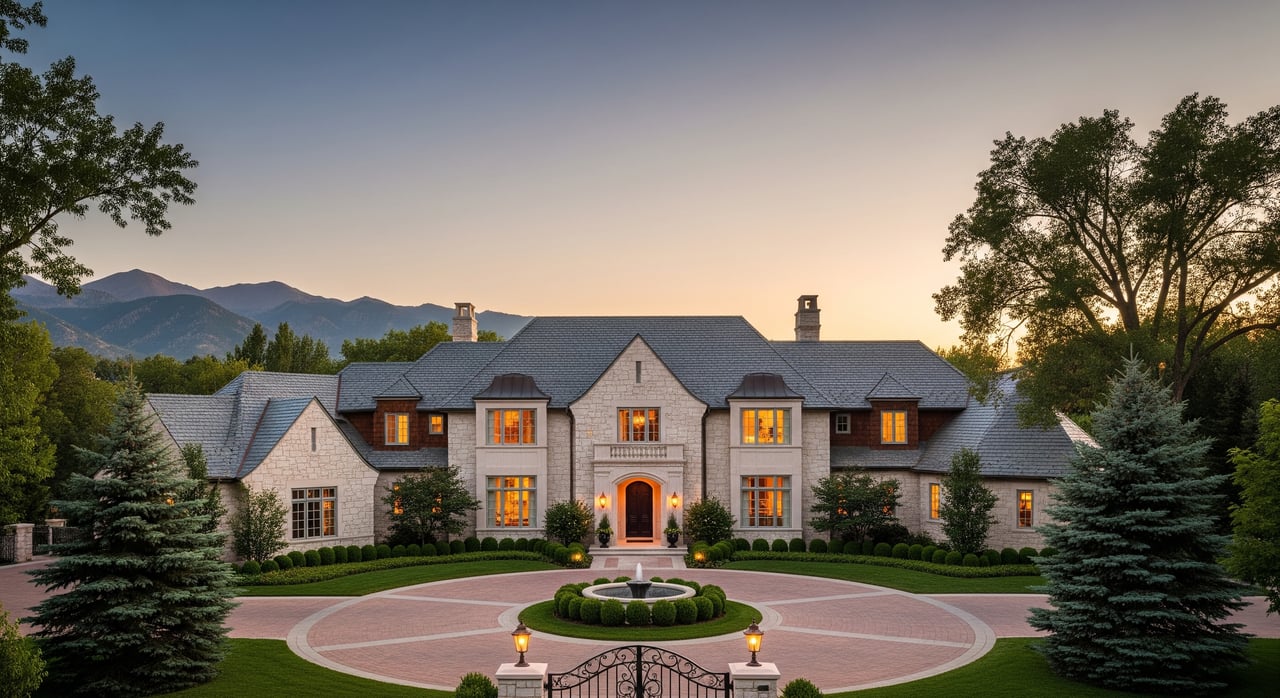
Buying or selling above $2 million in Cherry Hills Village? The rules are different at the top of the market. You want clarity on pricing, timing, and what it takes to win with discerning buyers and limited, unique inventory. In this guide, you will learn how supply and demand shape outcomes, how macro signals like rates and migration show up locally, and the strategies that work by price band. Let’s dive in.
What drives Cherry Hills luxury
Cherry Hills Village is a low-density, estate-focused market. Lot size, privacy, and architectural quality often carry more weight than raw square footage. Unique properties and thin comparables mean appraisals can be tricky, and the right marketing can unlock significant premiums.
At $2 million and above, you are competing in a micro-market driven by lifestyle. Buyers value privacy, mature landscaping, proximity to country club amenities, and commuting access to downtown and DEN. Inventory is constrained by zoning and lot sizes, so new supply often comes from teardown and rebuild activity rather than large subdivisions.
Key metrics to watch
These indicators help you read the market and decide when to act. Ask your agent to pull the latest 30, 90, and 180-day views for the $2 million plus segment.
Supply and months of inventory
Months of inventory tells you balance between supply and sales. As a rule of thumb, less than 6 months signals a seller’s market, around 6 is balanced, and more than 6 leans to a buyer’s market. Monitor active and new listings, plus closed and pending sales. Rising supply without matching demand often leads to longer days on market and more negotiation.
Demand and days on market
Average and median days on market show buyer velocity. A shortening timeline means buyers are decisive and well qualified. If market times lengthen, make sure pricing and presentation align with the best competing listings, not just recent sales.
Pricing and list-to-sale ratio
List-to-sale price ratio reveals how much buyers actually pay relative to asking. When ratios tighten near or above 100 percent, value is clear and buyers compete. When ratios soften, set expectations for strategic pricing, targeted concessions, or improved presentation.
Cash, jumbo, and appraisals
All-cash activity is common in upper sub-bands and can compress timelines. Many buyers use jumbo mortgages at $2 million and above, so rate moves can narrow or expand the active buyer pool. Unique estates can face appraisal gaps. Be prepared with an appraisal package that documents upgrades, acreage, custom features, and relevant high-end comps.
Price bands behave differently
Each sub-band has a distinct buyer pool and pace. Position your strategy to match the likely buyer.
$2–3M: larger buyer pool
This band sees the most activity within luxury. Price competitively to attract multiple offers. High-impact photography, clear floor plans, and easy showing access matter most. For buyers, sharpening terms such as larger earnest money and shorter due diligence can win over small price differences.
$3–5M: focus and positioning
The pool narrows and buyers compare carefully against new builds and recent custom renovations. Staging and targeted marketing are essential. Sellers should highlight lifestyle benefits like privacy, mature trees, and outdoor living spaces. Buyers should be ready to bridge appraisal risk or increase down payments if financed.
$5–10M and $10M+: bespoke strategy
Ultra-luxury properties require concierge-level execution, private networks, and international reach. Expect longer timelines to sale. Pricing must reflect scarcity and uniqueness, supported by top-of-market comps. Buyers often succeed with proof of funds, limited contingencies, and relationship-based access to off-market opportunities.
Macro trends, local impact
Big-picture shifts ripple into Cherry Hills Village. Here is how to “translate” them into local decisions.
Rates and lending
Jumbo mortgage rates influence affordability in every sub-band. Rising rates tend to slow financed demand or shift buyers toward stronger value propositions like turnkey condition or energy-efficient systems. If rates trend down, expect renewed competition among leveraged buyers and firmer pricing in the $2–3 million band.
Migration and buyer sources
Inflows from higher-cost coastal markets expand the cash and high-down-payment buyer pool. Remote and hybrid work continues to support demand for acreage, home offices, and privacy. Highlighting lot size, outdoor amenities, and quick access to city and airport helps sellers meet these priorities.
New build versus resale
When metro-level new construction sets fresh price benchmarks, resale homes must position carefully. If you are a seller, emphasize what new builds cannot replicate: established tree canopy, larger lots, and location near private amenities. If you are a buyer, decide early whether you will pay a premium for turnkey or pursue a renovation value play.
Seller playbook: from prep to close
Use these steps to reduce friction, protect price, and speed your timeline.
Price with purpose
Calibrate against active competition within your sub-band, not just past sales. In $2–3 million, aim to spark activity with a compelling initial list price. In $3–5 million and above, weigh uniqueness and time-on-market sensitivity. Reassess after the first meaningful showing window based on qualified feedback and market signals.
Prep that pays
- Complete pre-list inspections for roof, mechanicals, septic or sewer, and structural items. This builds buyer confidence.
- Invest in strategic updates with high return like kitchens, primary suites, lighting, and paint. Avoid over-improving beyond neighborhood comps.
- Showcase acreage and privacy with landscape grooming and drone photography.
Market for lifestyle
- Use professional photography, cinematic video, and floor plans to clarify scale and flow.
- Leverage luxury distribution, private client lists, and invitation-only showings for qualified prospects.
- Tell the lifestyle story: outdoor living, equestrian options where applicable, and proximity to country club and key corridors.
Negotiate and validate value
- Prepare an appraisal packet with upgrade lists, costs, permits, and top-end comps.
- If a financed buyer is ideal, anticipate appraisal gaps and be ready with credits for identified issues rather than across-the-board price cuts.
- Verify proof of funds and lender strength early to protect timelines.
Time your launch
List when competing inventory is thinner and buyer activity rises, often in spring. Also monitor interest rate direction. A pre-list campaign for top-tier properties can surface qualified buyers before day one on market.
Buyer strategies that win
Winning at $2 million and above requires clarity on value and strong terms.
Define value by lot and privacy
Decide how much you will pay for acreage, mature trees, and architectural quality. Many buyers prioritize privacy over raw square footage. If you prefer turnkey, be ready to pay a premium. If you want value-add, budget for renovations and longer timelines.
Strengthen your offer terms
- Use large earnest money and a tight due diligence timeline when you are confident in condition.
- If financing, consider higher down payments to reduce appraisal risk and signal strength.
- Keep contingencies focused. Limited requests and clear communication often beat small price gaps.
Timing and search channels
Ask your agent about off-market and coming-soon opportunities. In slower periods or when months of inventory rises, negotiate for credits or improvements instead of list price cuts. In faster periods, move quickly and come prepared with proof of funds or a strong jumbo pre-approval.
What to watch this quarter
Track these items with your agent for the $2 million plus segment and by sub-band:
- Months of inventory and trend direction.
- Median sale price, list-to-sale ratio, and price reductions.
- Average and median days on market.
- Cash share versus financed share and jumbo loan prevalence.
- Notable top-of-market closings and how they compare on lot size and finishes.
How we help
You deserve luxury-grade marketing and data-driven advice backed by a proven track record. Our team pairs local neighborhood expertise with the global reach of a premier luxury brokerage network. That means stronger positioning for sellers and sharper negotiation for buyers.
Ready to talk strategy for your home or search in Cherry Hills Village? Connect with Kylie Russell Real Estate to request your home valuation and a tailored plan.
FAQs
How long does a $3–5M home take to sell in Cherry Hills Village?
- Timelines vary with months of inventory and days on market; expect longer marketing times as price increases, and ask your agent for current 90 and 180-day figures before listing.
What drives price per square foot and per acre locally?
- Lot size, privacy, mature landscaping, and architectural quality often outweigh raw square footage; acreage and unique features typically command meaningful premiums.
How do interest rates affect $2M+ buyers in Cherry Hills Village?
- Jumbo rate changes influence financed demand and offer strength; rising rates can narrow the buyer pool, while easing rates usually boost activity and firm up pricing.
Are teardown or rebuild projects a good idea in Cherry Hills Village?
- They can be, but verify permits, zoning, and neighborhood comparables for new builds, and budget for carrying costs and timelines before committing.
What concessions are common in luxury deals in Cherry Hills Village?
- Credits tied to inspection findings and shorter yet focused contingency periods are typical; sweeping price cuts are less common when a home is well positioned.
When is the best time to list a $2M+ home in Cherry Hills Village?
- Spring often aligns thinner competing inventory with higher buyer activity, but you should also factor interest rate direction and your specific sub-band’s momentum.